How to Avoid Fines on European Toll Roads: Common Mistakes Travelers Make

James Whitfield
25 June 2026
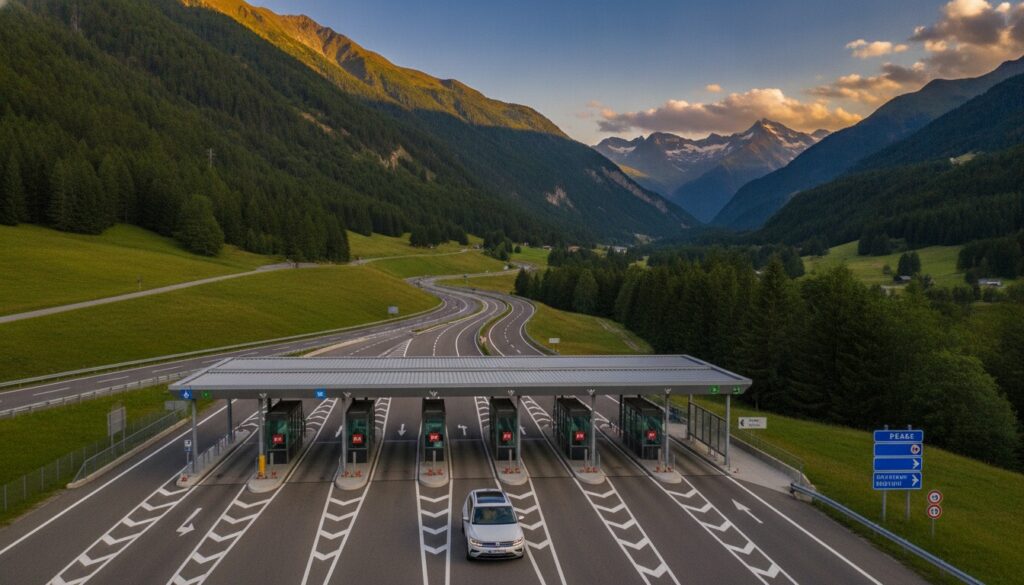
How to Avoid Fines on European Toll Roads: Common Mistakes Travelers Make
Every year, thousands of tourists return home from their European road trip only to find an unwelcome surprise in their mailbox: a toll fine — sometimes accompanied by hefty administrative fees that dwarf the original toll amount. Whether you’re cruising through the Alps, navigating the highways of Portugal, or island-hopping across Croatia, European toll systems can be confusing, inconsistent, and unforgiving.
The good news? Nearly every one of these fines is completely avoidable. In this comprehensive guide, we’ll walk you through the most common toll-related mistakes travelers make across Europe and give you the exact steps to stay fine-free on your next adventure.
Understanding How European Toll Systems Work
Before diving into the mistakes, it’s essential to understand that there is no single European toll system. Each country has its own rules, payment methods, and enforcement mechanisms. Broadly speaking, European toll roads fall into three categories:
1. Vignette-Based Systems
Countries like Austria, Switzerland, Czech Republic, Slovenia, Hungary, Romania, and Bulgaria use a vignette system. A vignette is essentially a prepaid pass that grants you access to the motorway network for a set period — typically 10 days, one month, or one year.
- In some countries (like Switzerland), vignettes are still physical stickers you attach to your windshield.
- In others (like Austria, Hungary, and Czech Republic), the system has gone fully digital — your license plate is registered electronically.
- Purchase digital vignettes online before you cross the border. Austria’s official site is [asfinag.at](https://www.asfinag.at), and most countries have equivalent official portals.
- If you’re renting a car, ask the rental company whether a vignette is included. Some include it; many don’t.
- At border crossings, look for gas stations or kiosks selling vignettes — but don’t rely on finding one at the last minute.
- In Portugal, purchase a temporary transponder or register your license plate at a CTT post office or online through the Via Verde Visitors service.
- In Spain and Italy, always look for the lane markings. Lanes marked with a “T” or “Telepass” are electronic only. Use lanes marked with a credit card symbol or a hand icon for manual payment.
- When renting a car, ask if a toll transponder is available as an add-on. It’s usually €1–€3 per day and can save you enormous hassle.
- Designate a specific spot in the car for toll tickets — a cup holder, a clip on the visor, or a small pouch on the dashboard.
- Take a photo of the ticket with your phone as a backup.
- Consider getting an electronic transponder (like France’s Liber-t badge) to bypass the ticket system entirely.
- Slow down as you approach toll plazas and read the overhead signs carefully.
- Look for universal symbols: 💳 for card, 🪙 for coins, “T” for transponder.
- Keep both cash (coins and small bills in local currency) and a chip-enabled credit card accessible.
- London – Congestion Charge (£15/day) and ULEZ (£12.50/day)
- Milan – Area C (€5/day)
- Brussels – LEZ registration required (free for compliant vehicles, but fines of €350 for non-registration)
- Germany – Many cities require an Umweltplakette (environmental sticker), available for about €5–€15
- Research LEZ requirements for every city you plan to visit.
- Register and pay online before entering the zone — most systems allow advance payment.
- For Germany, order your Umweltplakette online before your trip; it’s valid indefinitely.
- Rental cars in Portugal often come without a toll transponder.
- Vignettes in Austria and Switzerland are typically not included in the rental price.
- Some rental companies charge exorbitant administrative fees (€30–€50 per toll transaction) if they have to process toll charges on your behalf.
- Read your rental agreement carefully, paying special attention to the toll section.
- Ask the rental desk directly: “Is a toll transponder included? Is a vignette included?”
- If the rental company’s toll add-on is expensive, consider purchasing your own temporary transponder or vignette independently.
- Forwarded to debt collection agencies in your home country
- Added to your record if you rent a car in Europe again
- Escalated with significant late fees and administrative surcharges
- If you receive a fine, pay it promptly — early payment often comes with a discount of 30–50%.
- If you believe the fine is unjust, respond formally within the stated deadline. Many countries have an appeals process.
- Keep all toll receipts and vignette confirmations for at least 12 months after your trip.
- Google Maps / Waze – Both allow you to toggle “Avoid tolls” in route settings. While this may add time, it can save money on shorter trips.
- Tollsmart – A dedicated app that calculates toll costs for your specific route across Europe.
- ViaMichelin – Excellent for planning routes in France, Italy, and Spain with detailed toll cost breakdowns.
- Park4Night / CamperContact – If you’re traveling by campervan, these apps help you find routes and stops that minimize toll exposure.
2. Distance-Based Toll Systems
Countries like France, Italy, Spain, Portugal, and Poland charge tolls based on the distance you travel. You typically collect a ticket when entering the motorway and pay when you exit — either at a staffed booth, an automatic machine, or via an electronic transponder.
3. Hybrid and City-Specific Systems
Some countries combine methods or have special urban tolls. London’s Congestion Charge, Stockholm’s congestion tax, and Milan’s Area C are examples of city-specific tolls that catch many tourists off guard.
Pro Tip: Before you cross any border in Europe, spend five minutes researching the toll system of the country you’re entering. This single habit will save you from the vast majority of fines.
The 7 Most Common Toll Mistakes Travelers Make
Let’s break down the specific errors that lead to fines — and exactly how to avoid each one.
Mistake #1: Forgetting to Buy a Vignette
This is the number one mistake tourists make, especially in Austria and Switzerland. Many travelers assume that because they’re on a well-maintained highway, tolls will be collected at a booth. Instead, enforcement cameras scan your license plate, and if you’re not registered, a fine is automatically generated.
How to avoid it:
Fine example: In Austria, driving without a valid vignette can result in a fine of €120 on the spot, or up to €240 if paid later.
Mistake #2: Entering an Electronic-Only Lane Without a Transponder
In countries like Portugal, Spain, and Italy, some toll lanes are reserved for vehicles with electronic transponders (like Portugal’s Via Verde or Italy’s Telepass). These lanes have no barriers and no way to pay manually. If you drive through without a registered device, you’ll be photographed and fined.
Portugal is particularly notorious for this. Large stretches of motorway — especially the A22 in the Algarve — are entirely electronic, with no toll booths whatsoever.
How to avoid it:
Mistake #3: Losing Your Toll Ticket
On distance-based toll roads in France and Italy, you collect a ticket when you enter the motorway. If you lose that ticket, you’ll be charged the maximum possible toll — calculated as if you entered at the farthest point on the network.
How to avoid it:
Mistake #4: Using Cash in a Card-Only Lane (or Vice Versa)
Toll plazas often have multiple lane types, and entering the wrong one can cause a traffic jam behind you — or worse, force you to reverse or drive through without paying.
How to avoid it:
Important: Some toll machines in France and Italy do not accept non-European credit cards or cards without a chip-and-PIN. Always carry some euro coins as a backup.
Mistake #5: Ignoring Low Emission Zones and Urban Tolls
Many European cities have implemented Low Emission Zones (LEZ) or congestion charges that function similarly to tolls. Driving into these zones without registering or paying can result in steep fines.
Notable examples include:
Mistake #6: Assuming Your Rental Car Covers Everything
Many travelers assume that renting a car in Europe means all toll-related equipment and registrations are handled. This is rarely the case.
Mistake #7: Ignoring Fines and Hoping They Go Away
Some travelers receive a toll fine in the mail and assume that because they’re in a different country, the fine can’t be enforced. This is increasingly untrue.
The EU’s Cross-Border Enforcement Directive allows member states to share vehicle registration data. Unpaid fines can be:
Country-by-Country Quick Reference Guide
Here’s a handy summary of what you need in the most-visited European countries:
| Country | System | What You Need | Where to Buy |
|—|—|—|—|
| Austria | Digital vignette | E-vignette | asfinag.at or gas stations |
| Switzerland | Physical vignette | Sticker (CHF 40/year) | Border crossings, gas stations |
| France | Distance-based | Cash, card, or Liber-t badge | Toll booths or online |
| Italy | Distance-based | Cash, card, or Telepass | Toll booths or Punto Blu offices |
| Portugal | Electronic tolls | Via Verde transponder or online registration | CTT post offices, online |
| Spain | Distance-based + electronic | Cash, card, or Via-T | Toll booths |
| Czech Republic | Digital vignette | E-vignette | edalnice.cz or gas stations |
| Hungary | Digital vignette | E-vignette | nemzetiutdij.hu or gas stations |
| Slovenia | Digital vignette | E-vignette | evinjeta.dars.si |
| Germany | Free for cars (trucks pay) | Nothing for passenger vehicles | N/A |
Note: Germany’s Autobahn is currently toll-free for passenger vehicles, but this could change in the future. Always verify before your trip.
Essential Tools and Apps for Toll-Free Stress
Technology can be your best friend when navigating European tolls. Here are some tools worth downloading before your trip:
Final Thoughts: A Little Preparation Goes a Long Way
European toll systems aren’t designed to trick you — but they are designed for people who know the rules. As a tourist, you’re at an inherent disadvantage because the rules change at every border. The key takeaway is simple: research before you drive.
Spend 15 minutes before your trip looking up the toll requirements for every country on your route. Buy vignettes and register transponders in advance. Read your rental car agreement. And keep your receipts.
The cost of preparation is zero. The cost of ignorance can be hundreds of euros in fines, administrative fees, and stress that no one wants on vacation.
Your Next Step: Plan Your Route, Not Your Fines
Ready to hit the road? Before you go, bookmark this guide and share it with your travel companions. If you’re planning a European road trip, check out our other articles on road trip packing essentials, best scenic drives in Europe, and how to choose the right rental car for your adventure.
Have you ever received an unexpected toll fine in Europe? Share your experience in the comments below — your story might help another traveler avoid the same mistake!
Safe travels and happy driving! 🚗✨